
Share your knowledge
Antes de Instagram, cuando internet era de blogs y compartir información gratis parecía lo más importante del mundo, hicimos esto con Juan Christmann.
Durante un año juntamos más de cien consejos. Cosas que aprendimos viviendo, sobre cualquier tema. Las imprimimos en etiquetas, las pegamos sobre disquetes y salimos a pegar los disquetes en la calle con cinta doble faz. En Buenos Aires, en Mendoza, en Lisboa, en El Cairo, donde estuviéramos. La idea era simple. Que alguien se cruzara uno por la calle y, con suerte, se llevara el consejo.
El disquete no es casual. Cuando lo usamos ya estaba muerto. Nadie tenía cómo leerlo. Compartir conocimiento en el objeto que dejó de poder guardarlo. Esa contradicción es la obra. Un soporte que grita "acá hay información" y por dentro no tiene nada que se pueda abrir.
Me interesaba la idea del consejo como cheat code. La posibilidad de resolver algo sin tener que sufrir todo el camino. Una frase que te ahorra años. Y me parecía interesante y estúpido a la vez. Estúpido porque a nadie le importa, y porque casi todo se aprende viviéndolo, no escuchándolo. Pero a mí me pasó al revés muchas veces. Un consejo suelto, dicho por cualquiera, me ahorró muchísimo.
Por eso lo hice sabiendo que no iba a funcionar. Un disquete ilegible, pegado en un poste, con una verdad adentro que casi nadie va a frenar a leer. Igual lo pegué. Por si justo pasa el que lo necesitaba. Vale la pena intentarlo.
Before Instagram, back when the internet was made of blogs and sharing free information felt like the most important thing in the world, Juan Christmann and I made this.
For a year, we collected over a hundred pieces of advice. Things we learned by living, about any topic. We printed them on labels, stuck them onto floppy disks, and went out to paste the floppy disks on the street using double-sided tape. In Buenos Aires, in Mendoza, in Lisbon, in Cairo—wherever we happened to be. The idea was simple: for someone to stumble upon one on the street and, with any luck, take the advice with them.
The floppy disk wasn't a random choice. When we used it, it was already dead. Nobody had a way to read it anymore. Sharing knowledge on the very object that could no longer store it—that contradiction is the piece. A medium that screams "there is information here," yet contains nothing you can actually open on the inside.
I was drawn to the idea of advice as a cheat code. The possibility of solving something without having to suffer through the entire journey. A single sentence that saves you years. And it seemed both interesting and stupid to me at the same time. Stupid because nobody cares, and because almost everything is learned by living it, not by hearing it. But for me, it had worked the opposite way many times. A random piece of advice, spoken by anyone, saved me a massive amount of trouble.
That’s why I did it knowing it wouldn't work. An unreadable floppy disk, pasted on a pole, containing a truth that almost nobody will stop to read. I pasted it anyway. Just in case the person who needed it happened to walk by. It’s worth the try.
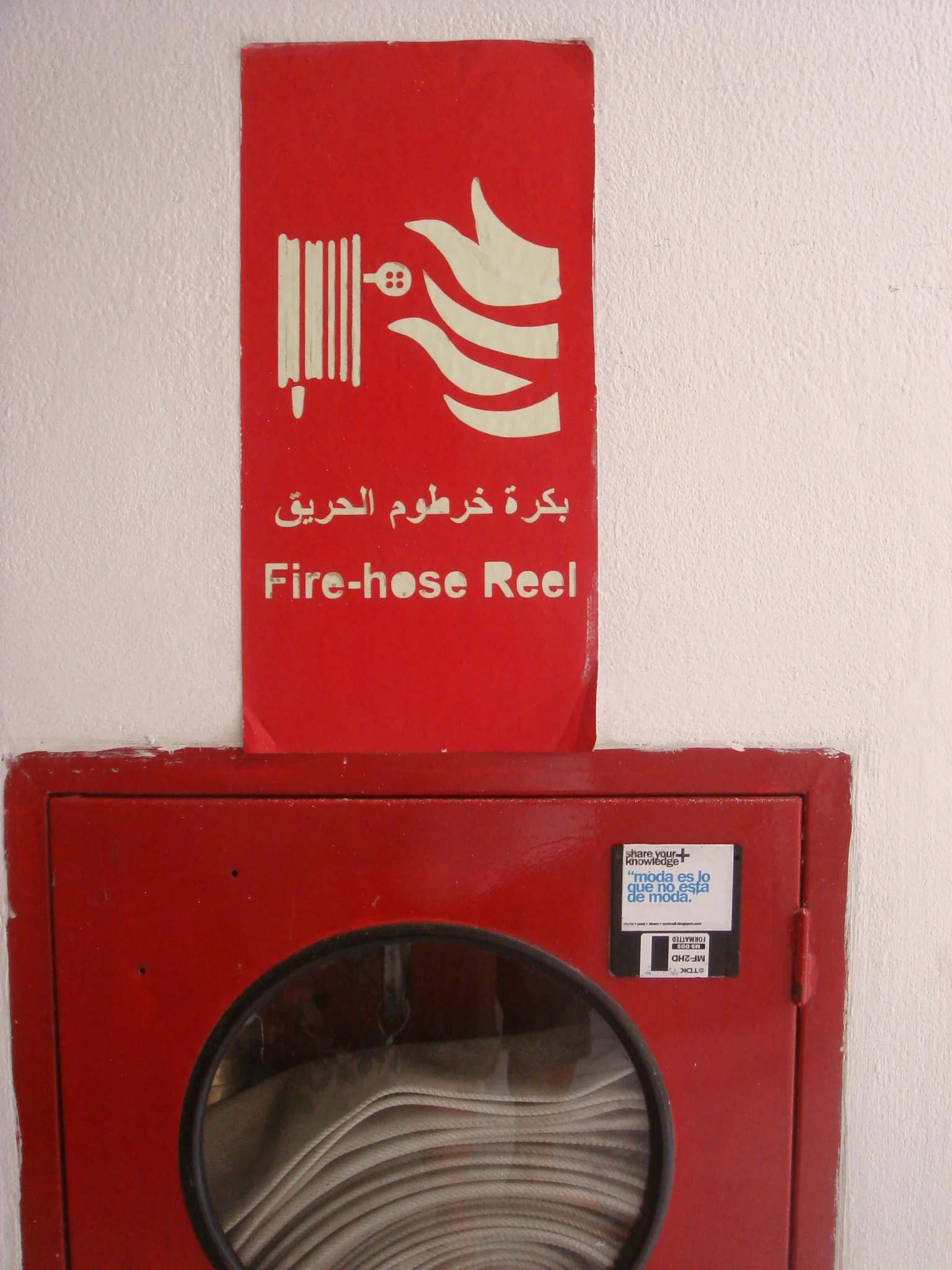
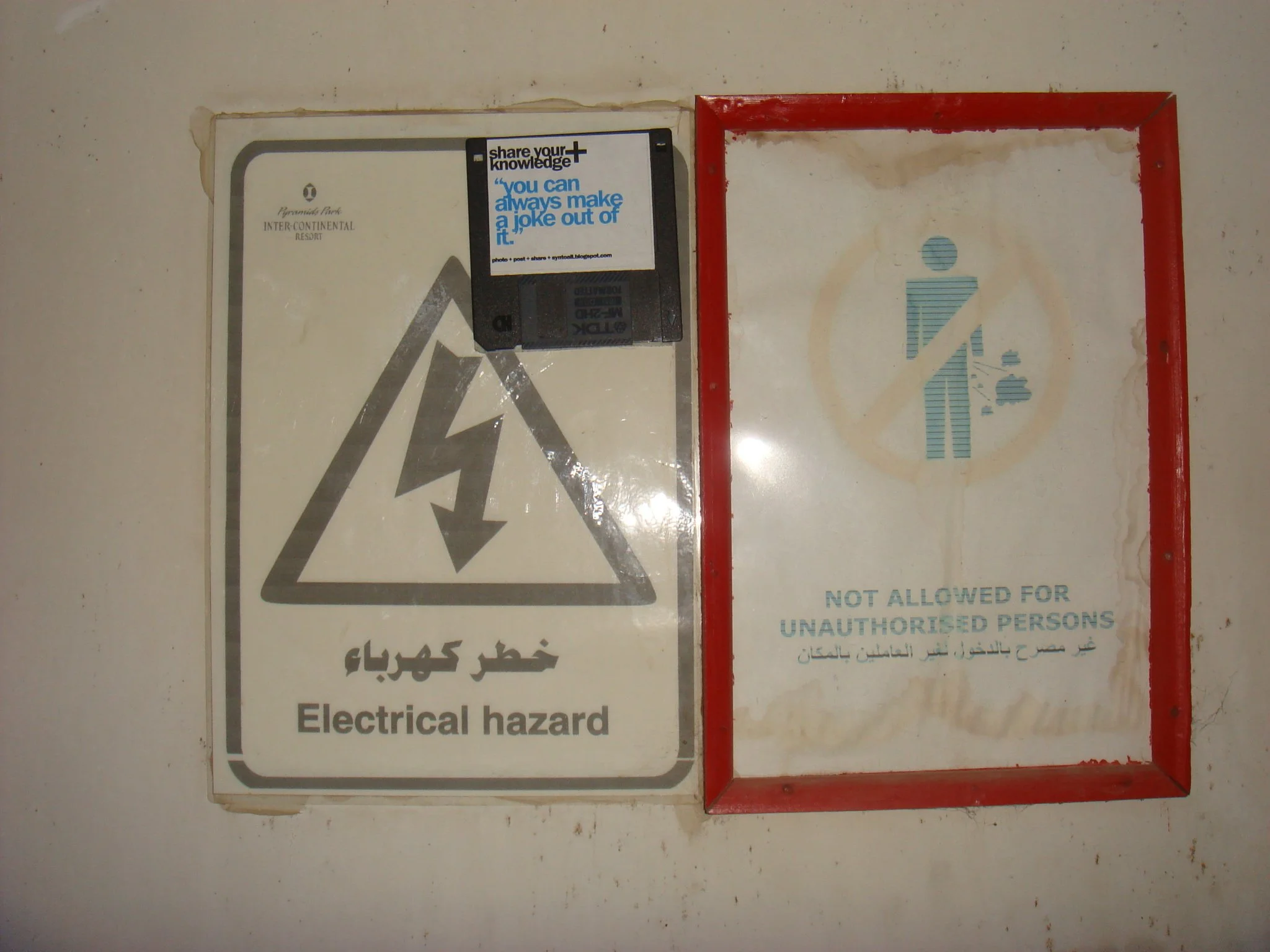
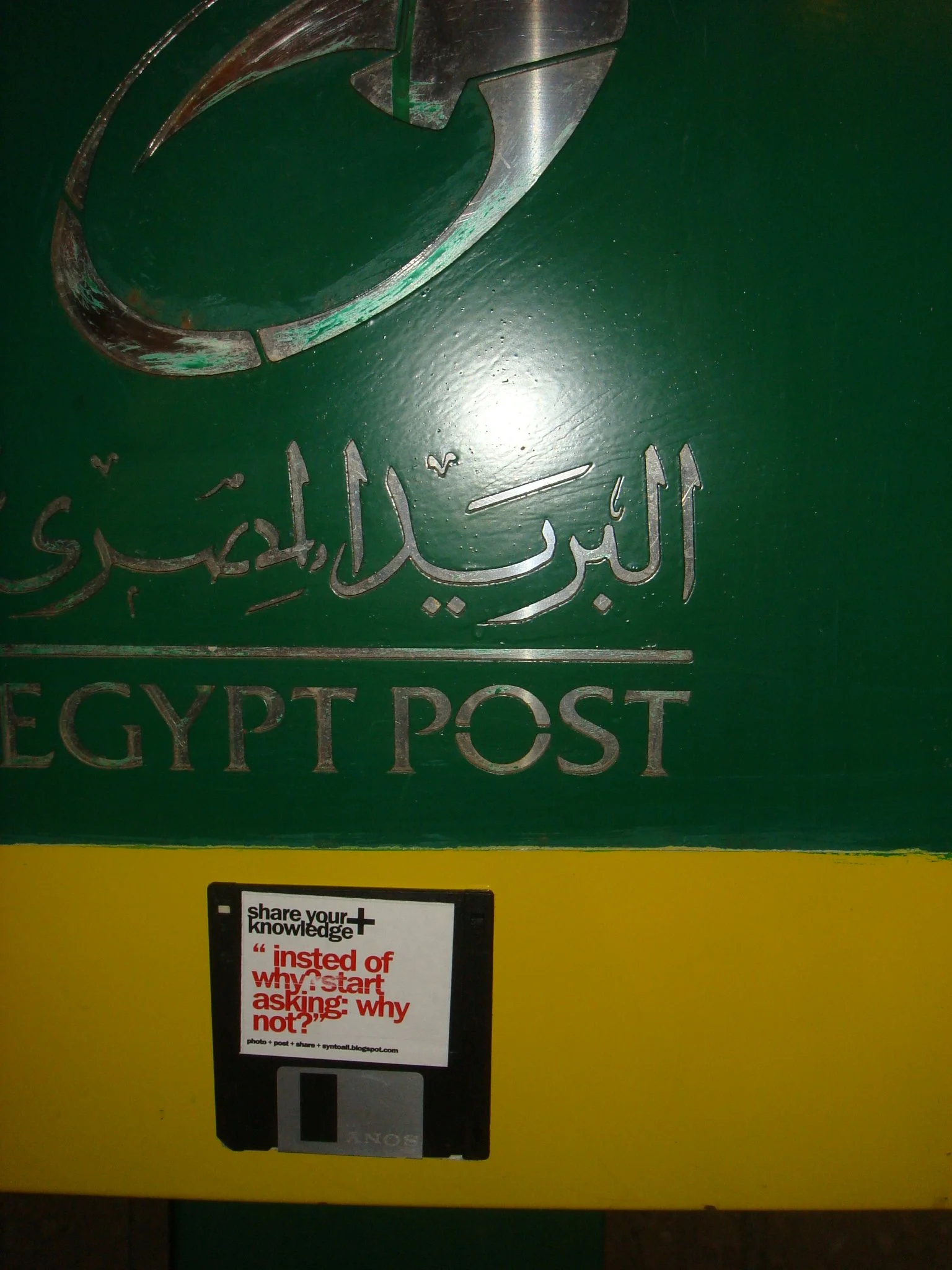
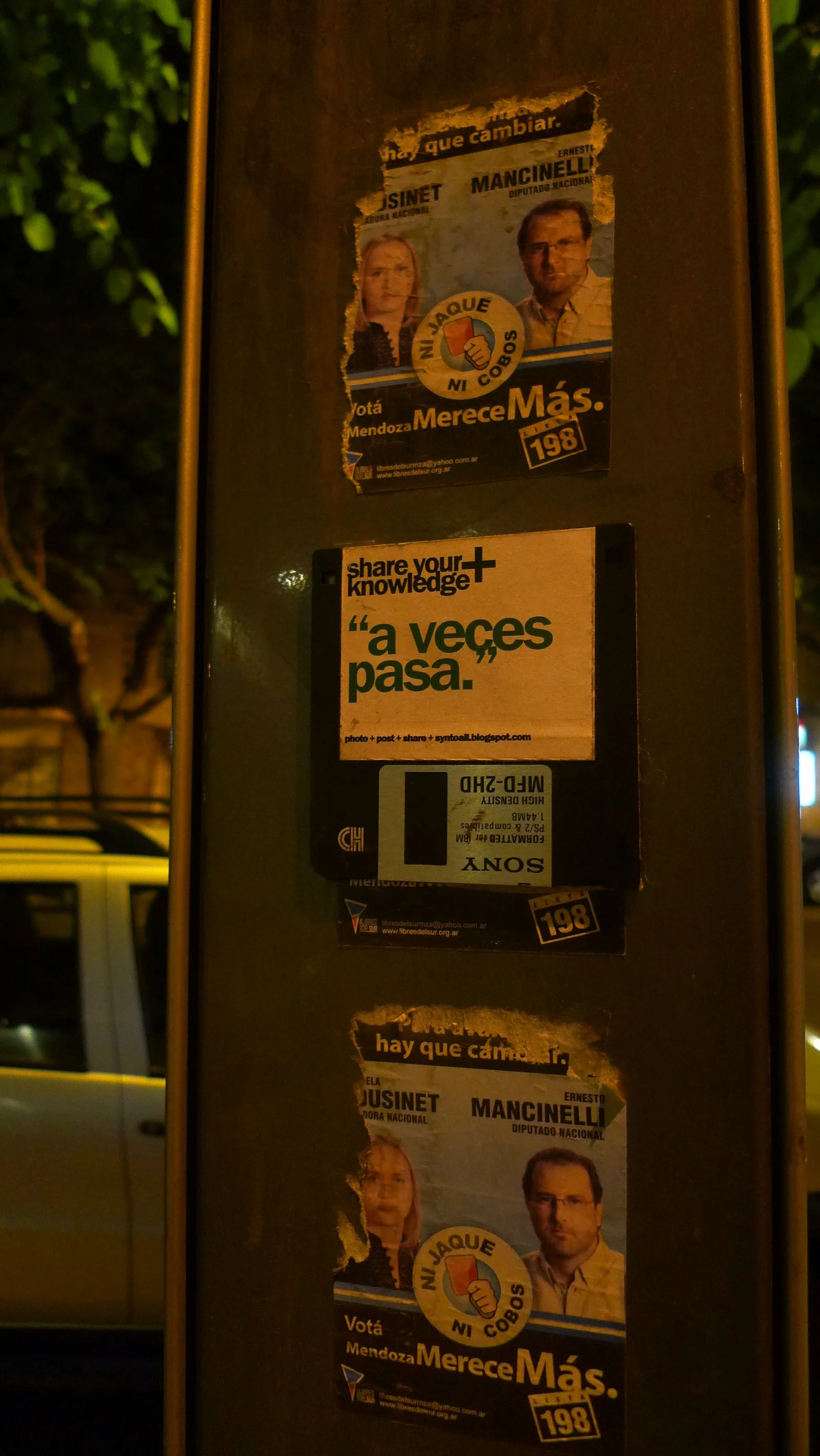
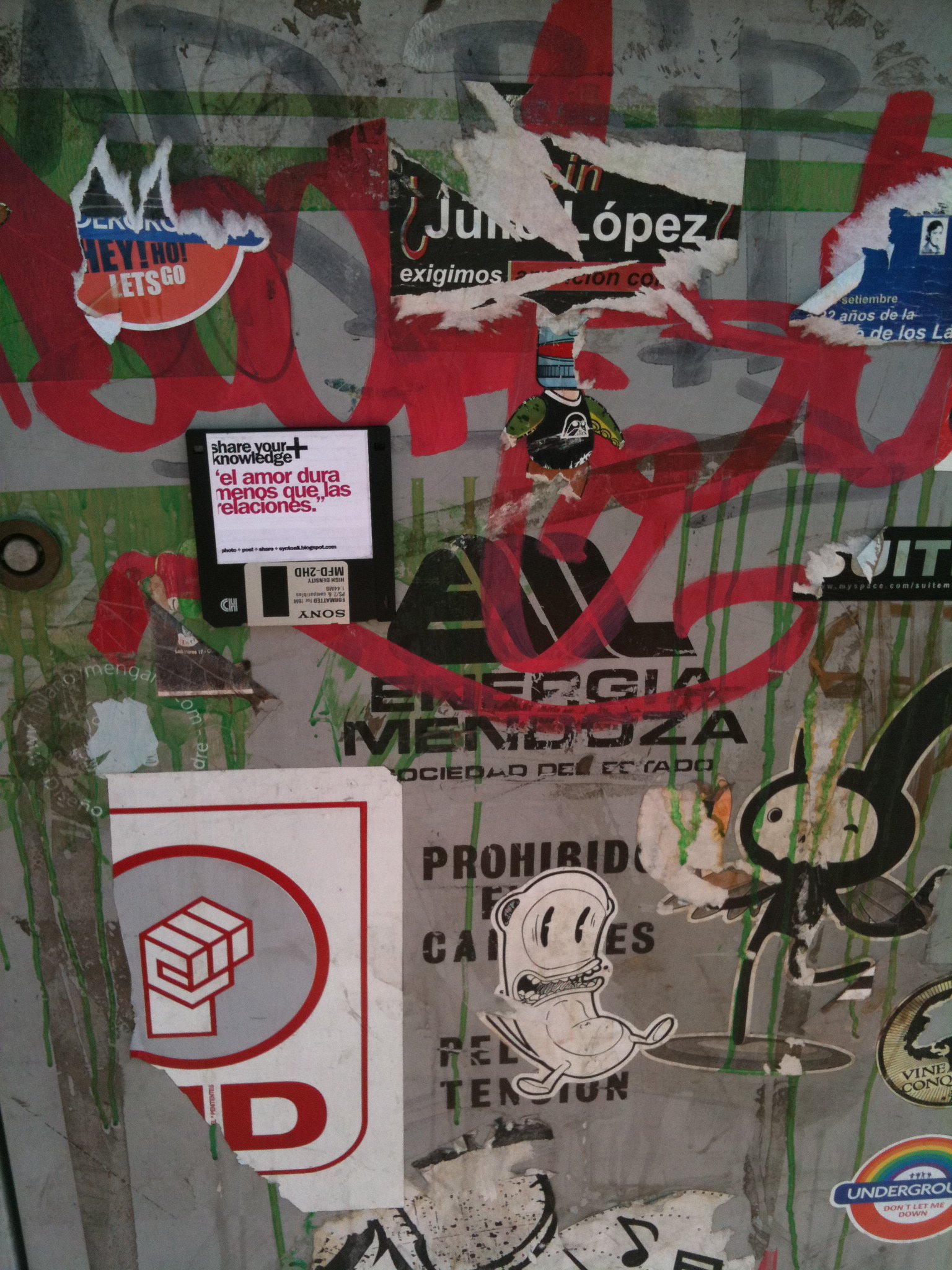
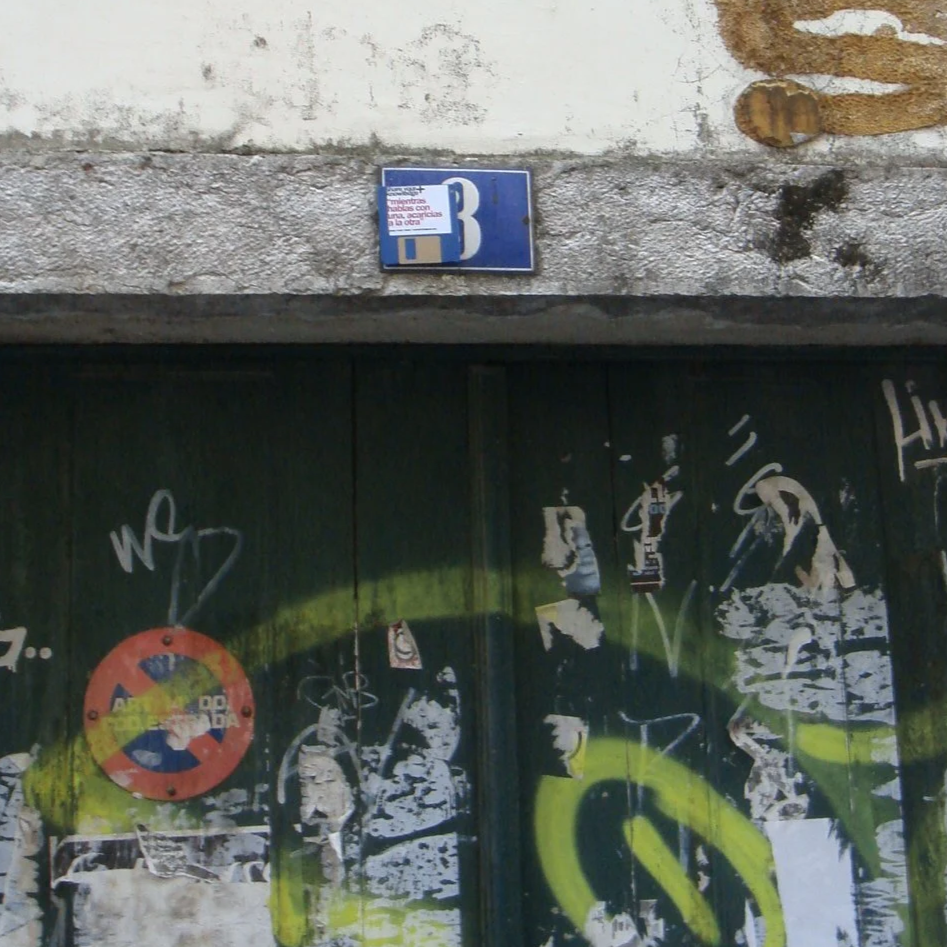
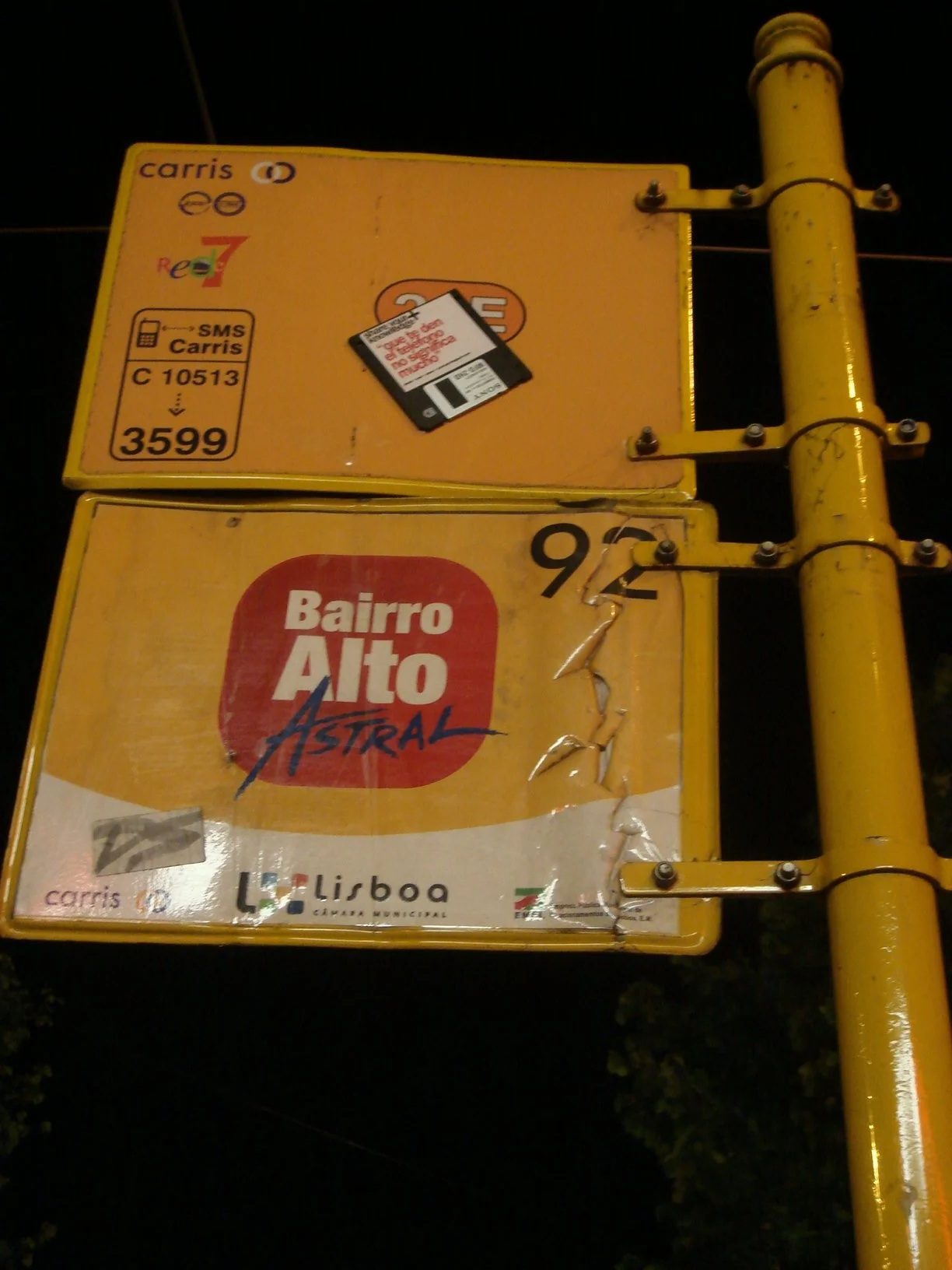
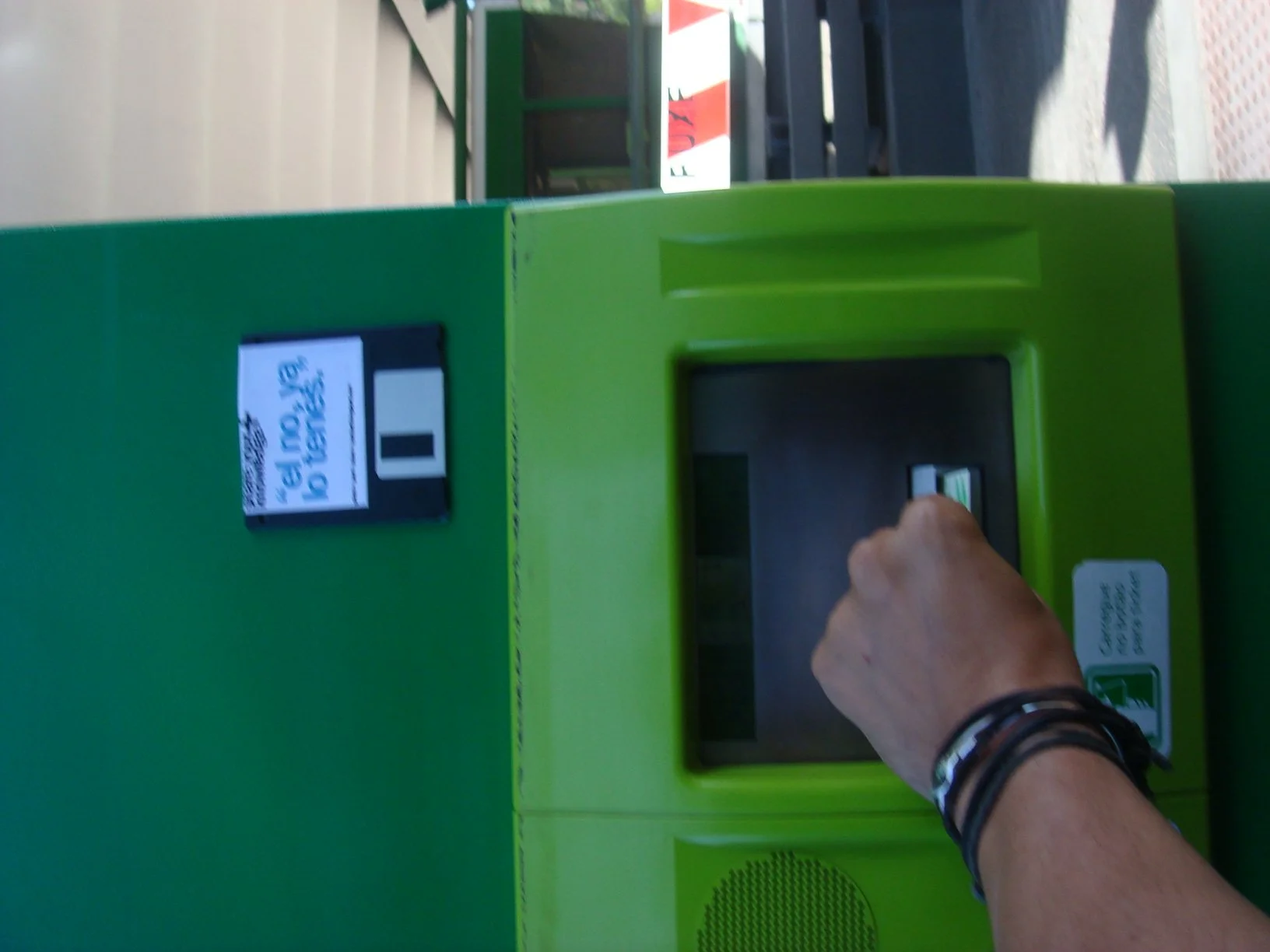
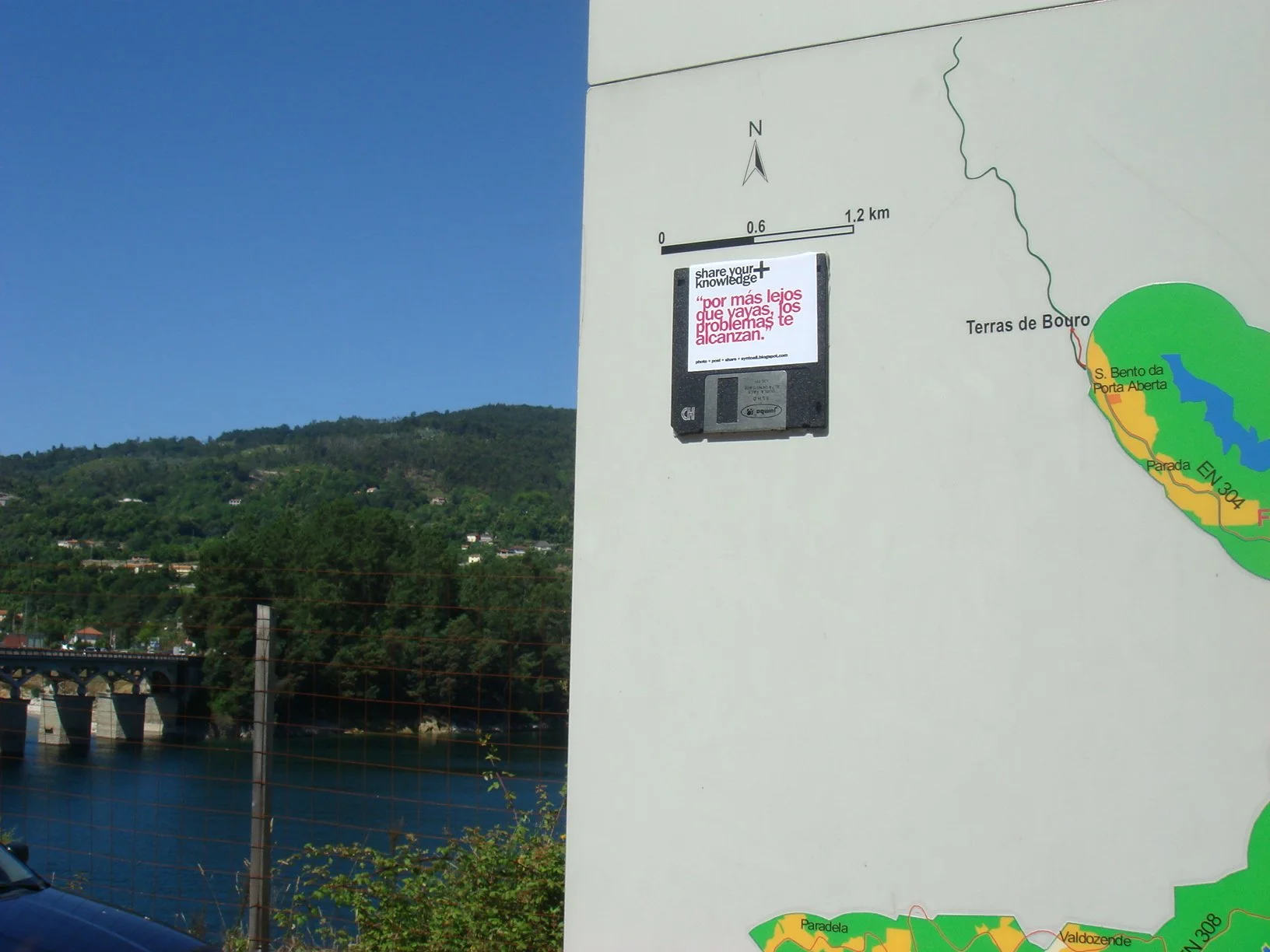
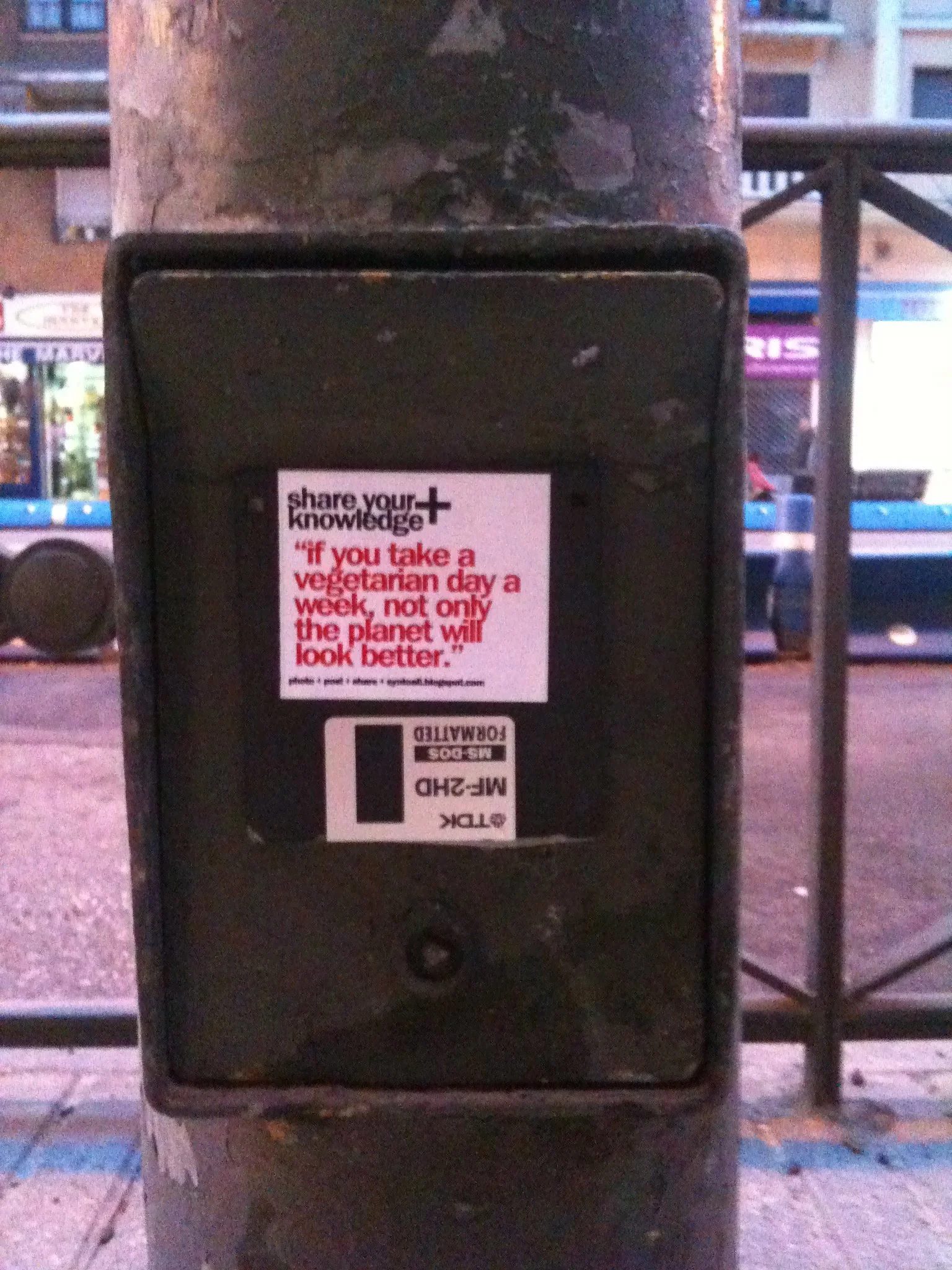
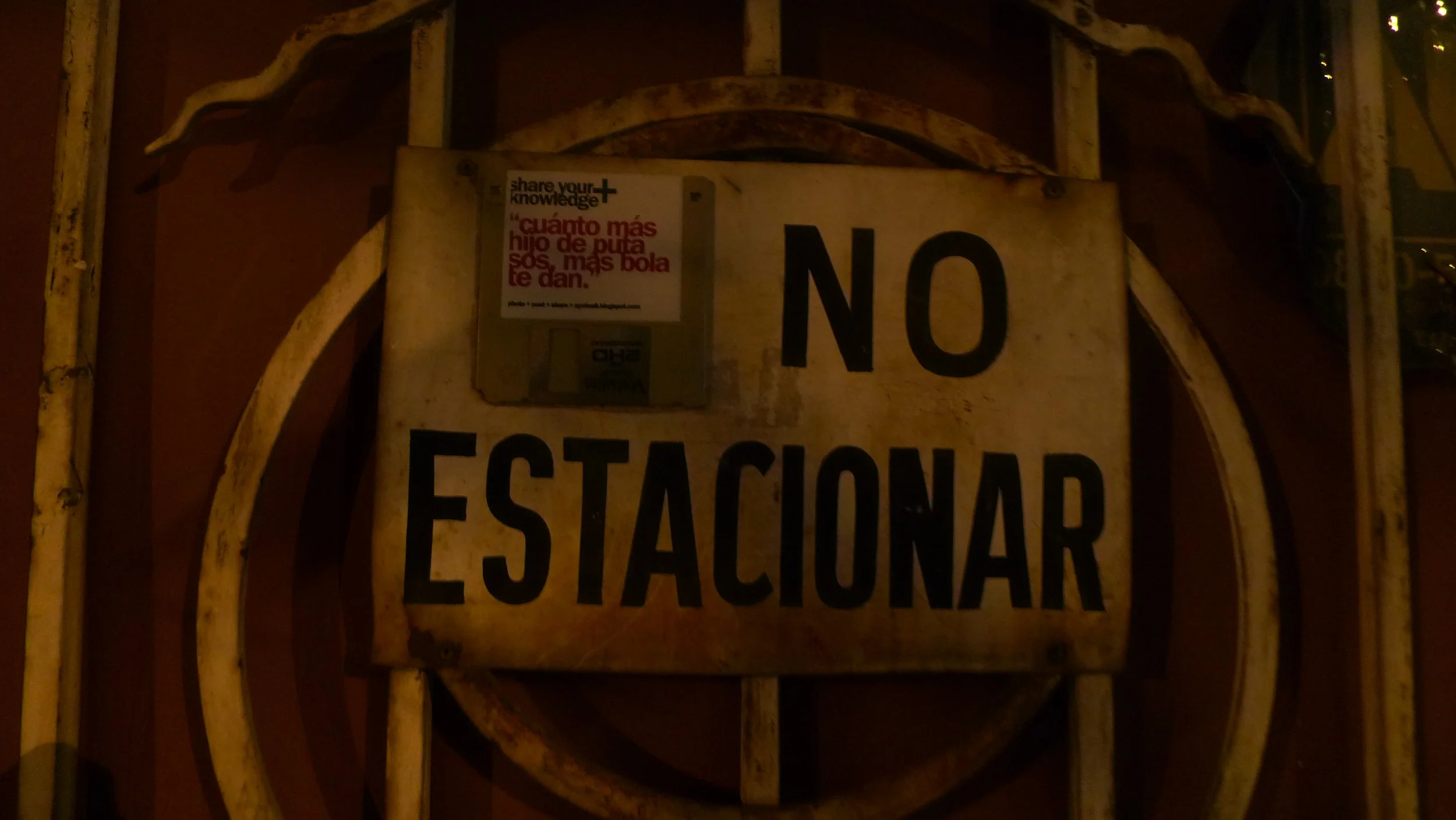
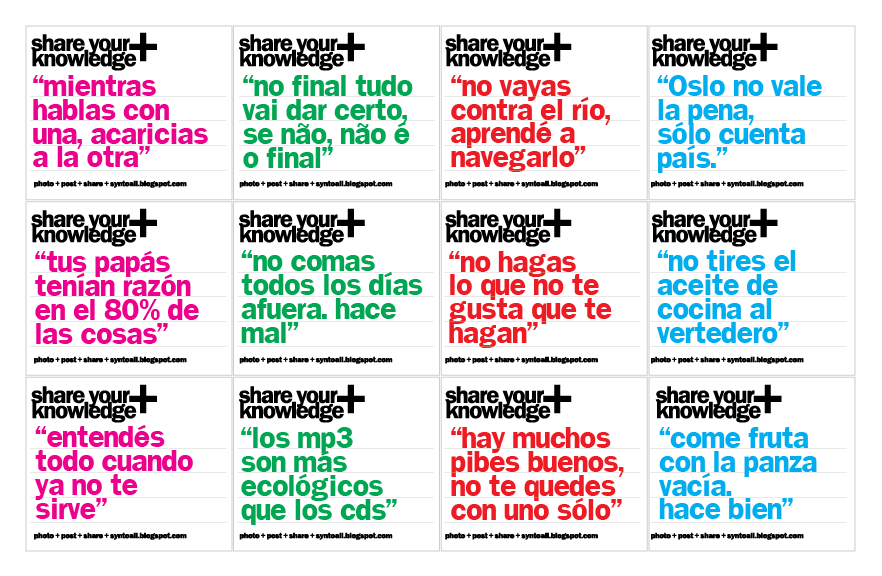
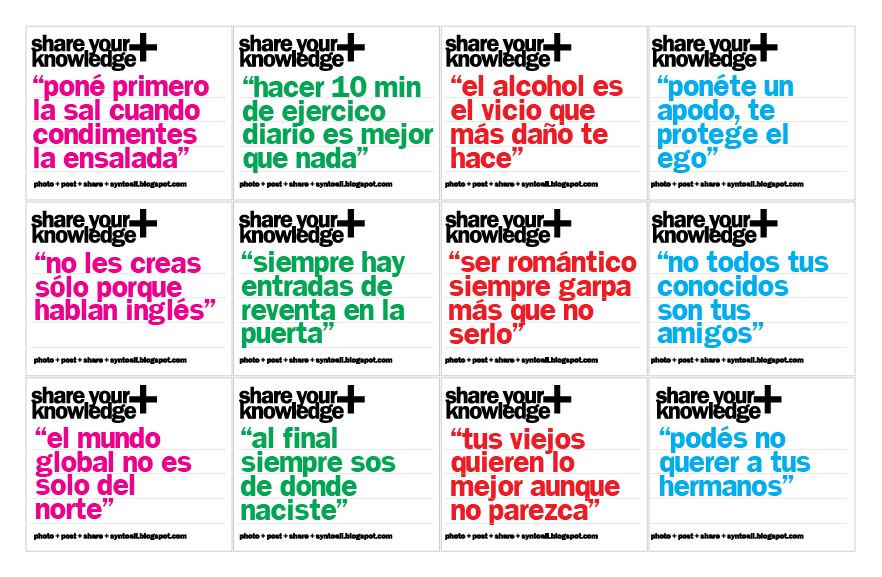
Share Your Knowledge
2009
Técnica y soporte / Medium: Intervención en espacio público. Disquetes con carátula impresa, cada uno con un consejo, pegados en la calle con cinta doble faz. Más de cien piezas instaladas en distintas ciudades. Public space intervention. Floppy disks with a printed label, each carrying a piece of advice, stuck on the street with double-sided tape. Over a hundred pieces installed across different cities.
Medidas / Dimensions: 9 x 9,4 cm cada pieza / each piece
Dimensiones variables en instalación / Dimensions variable as installed
Concepto y realización / Concept and production: ilchacho y Juan Christmann.